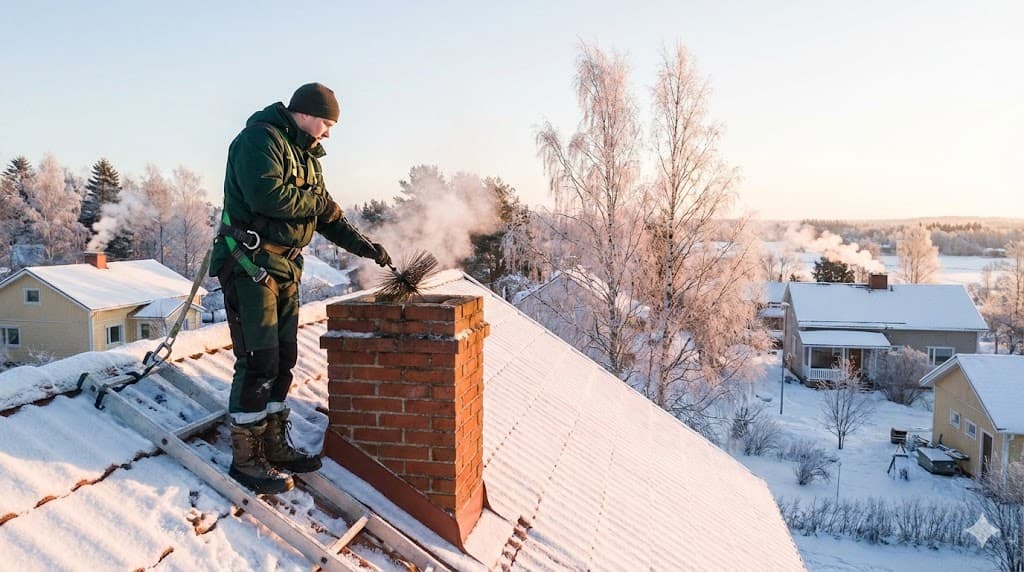
Roof Maintenance Guide — How to Keep Your Roof in Shape for Decades
A well-maintained roof protects your entire home. This guide covers everything from regular inspections and moss removal to painting and safety equipment, helping you extend your roof's lifespan by decades.
Illustration
- Annual roof inspections catch small problems before they become expensive repairs
- Moss and lichen removal every 3–5 years prevents moisture damage to roofing materials
- A properly timed roof painting extends the roof's service life by 10–15 years
- Roof safety products are a legal requirement in Finland and protect maintenance workers
- A comprehensive maintenance calendar keeps your roof in top condition year after year
Article Summary
| Topic | roof maintenance |
| Reading time | 12 minutes |
| Updated | 2/20/2026 |
| Author | Talon Toveri — Editorial Team |
| Suitable for | Homeowners, housing associations |
The importance of roof maintenance
Your roof is the single most important protective barrier your home has against the elements. In Finland, roofs endure extreme conditions — heavy snowfall in winter, freeze-thaw cycles in spring and autumn, intense UV radiation in summer, and relentless rain throughout the year. Without regular maintenance, these forces gradually degrade even the most durable roofing materials, leading to leaks, structural damage, and costly emergency repairs.
Regular roof maintenance is one of the most cost-effective investments a homeowner can make. An annual inspection costing 150–300 euros can catch minor issues like cracked tiles, loose flashings, or early moss growth before they escalate. By comparison, water damage caused by a neglected roof can easily result in repair bills of 10,000–50,000 euros, depending on the extent of damage to insulation, framing, and interior finishes.
A well-maintained roof also directly impacts your property's value. Buyers and real estate appraisers pay close attention to roof condition, and a documented maintenance history can add thousands of euros to the sale price. Conversely, a roof in poor condition is one of the most common reasons for price negotiations or failed property deals.
Beyond financial considerations, a sound roof ensures comfortable living conditions. Even small leaks can lead to mold growth inside wall and ceiling structures, causing indoor air quality problems that affect your family's health. Preventive roof maintenance is always cheaper, easier, and less disruptive than reactive repairs.
Illustration
Roof types and their characteristics
Finnish homes feature several common roof types, each with distinct maintenance requirements. Understanding your roof type is the first step toward effective maintenance planning.
Metal roofing (steel and tin) is the most popular choice in Finland, covering roughly 60–70% of detached houses. Metal roofs are durable, with a lifespan of 30–50 years when properly maintained. Their main enemies are rust, scratching of the protective coating, and moss growth in shaded areas. Metal roofs should be washed every 3–5 years and repainted every 15–20 years, depending on the coating type. A full metal roof repaint costs approximately 3,000–6,000 euros for a typical detached house.
Tile roofing (concrete and clay) is prized for its longevity, often lasting 40–60 years or more. However, individual tiles can crack due to frost damage or impact, and the porous surface is particularly susceptible to moss and lichen growth. Broken tiles should be replaced promptly to prevent water infiltration. Tile roof cleaning requires careful technique — high-pressure washing can damage the tile surface, so moderate pressure (under 100 bar) or chemical moss treatment is recommended.
Bitumen felt and shingle roofing is common on garages, outbuildings, and some older houses. These roofs have a shorter lifespan of 15–30 years and are more vulnerable to UV degradation and mechanical damage. Regular inspection for blistering, cracking, and lifted edges is essential. Bitumen roofs benefit greatly from reflective coatings that reduce UV damage and extend service life.
Roof inspection — what and when
A thorough roof inspection should be performed at least twice a year — in spring after the snow melts and in autumn before the freeze sets in. Additionally, it is wise to inspect the roof after severe storms or unusually heavy snowfall. You can do a basic visual inspection from the ground using binoculars, but a proper hands-on inspection requires getting onto the roof safely.
Key inspection points include:
- Roofing material condition: look for cracked, loose, or missing tiles, rust spots on metal, blistering on felt roofing
- Flashings: check all joints around chimneys, vents, skylights, and roof edges for gaps or lifting
- Gutters and downspouts: ensure they are firmly attached, free of debris, and draining properly
- Ridge and hip tiles: verify they are secure and sealed
- Moss and lichen growth: note areas of heavy biological growth for treatment
- Roof penetrations: inspect seals around antenna mounts, ventilation pipes, and other penetrations
- Attic space: check for signs of moisture, staining, or daylight coming through
Professional roof inspections are recommended every 2–3 years, even if you perform your own visual checks. A professional inspector has the experience to spot subtle issues that homeowners often miss, such as early-stage delamination, hidden flashing failures, or inadequate ventilation. A professional inspection typically costs 150–400 euros and includes a detailed report with photographs and maintenance recommendations.
Document every inspection — date, findings, and any actions taken. This maintenance log is invaluable for tracking the roof's condition over time and serves as important documentation for insurance claims or property sales.
Illustration
Roof washing and moss removal
Moss, lichen, and algae growth on roofs is extremely common in Finland's humid climate, especially on north-facing slopes and in shaded areas near trees. While it may seem purely cosmetic, biological growth actually causes real damage. Moss roots penetrate between tiles and under metal coatings, retaining moisture that accelerates corrosion and frost damage. Over time, heavy moss growth can even block water drainage, causing pooling and leaks.
Professional roof washing is the most effective way to remove biological growth. The process typically involves applying a specialized biocide or moss-killing solution, allowing it to work for a period, and then rinsing the roof with controlled-pressure water. For metal roofs, a pressure of 80–120 bar is generally safe, while tile roofs require a gentler approach at 60–100 bar to avoid surface damage. The cost of professional roof washing ranges from 500 to 1,500 euros for a typical detached house, depending on roof size, pitch, and the severity of growth.
After washing, applying a preventive moss treatment significantly extends the time before regrowth occurs. Zinc or copper strips installed along the ridge are another effective long-term solution — rainwater washes trace amounts of metal down the roof surface, inhibiting moss growth naturally. Zinc strips cost approximately 10–20 euros per meter and are easy to install during other roof work.
The ideal time for roof washing is late spring or early summer, when temperatures are above +10 °C and the roof has dried after snowmelt. Avoid washing in direct hot sunlight, as cleaning solutions can dry too quickly and leave streaks. Most professionals recommend washing the roof every 3–5 years, though heavily shaded roofs may need more frequent treatment.
Need professional help?
Talon Toveri's trained professionals help with all home maintenance tasks. Request a free, no-obligation quote.
★★★★★ 4.8/5 — 2,500+ satisfied customers
Roof painting and coating
Roof painting is one of the most impactful maintenance tasks you can undertake — a fresh coat of paint not only dramatically improves your home's appearance but also provides critical protection against corrosion, UV radiation, and moisture. For metal roofs, repainting is typically needed every 15–20 years, though this varies based on the original coating quality, exposure conditions, and color (darker colors tend to fade and degrade faster).
The roof painting process begins with thorough preparation. The surface must be completely clean — professional washing is essential before painting. Any rust spots on metal roofs need to be treated with a rust converter and primed before the topcoat is applied. Loose or flaking old paint must be scraped or wire-brushed away. Preparation accounts for roughly 40–50% of the total project cost but is absolutely critical for a durable result.
Modern roof paints offer excellent durability and come in a wide range of colors. Acrylic-based roof paints are the most common choice for metal roofs, providing good UV resistance and flexibility. For the best results, two coats are applied, with proper drying time between them. The total cost of professional roof painting for a detached house ranges from 3,000 to 7,000 euros, including washing, preparation, and two coats of high-quality paint.
Timing is critical for roof painting. The work requires at least two consecutive dry days with temperatures above +10 °C and no rain forecast. In Finland, the optimal painting window is from late May through August. Early booking is essential, as reputable roof painting contractors are heavily booked during the short summer season. Request quotes in winter or early spring for the best availability and potentially better pricing.
Roof safety products and annual maintenance calendar
Roof safety products are not optional extras in Finland — they are a legal requirement under building regulations. Every roof must have adequate safety equipment to allow safe access for maintenance, chimney sweeping, and snow removal. The required products include roof ladders, walkways (catwalks), snow guards, and safety anchors or railings at working areas.
Essential roof safety products:
- Roof ladder: provides safe climbing access from the eave to the ridge, cost 200–500 euros per ladder
- Roof walkways: horizontal walkways along the ridge and to chimneys, ventilation units, and other service points, cost 50–100 euros per meter
- Snow guards: prevent dangerous snow slides from the roof, particularly important above entrances, walkways, and patios, cost 30–70 euros per meter
- Safety anchors: fixed anchor points for personal fall protection harnesses, cost 100–200 euros per anchor
- Wall ladder: permanent access ladder on the building wall leading to the roof, cost 300–800 euros
All roof safety products should be inspected annually for corrosion, loose fasteners, and structural integrity. Damaged or weakened components must be replaced immediately — there is no safe compromise when it comes to fall protection. Professional installation is strongly recommended, as improperly mounted safety equipment can be more dangerous than none at all. A complete roof safety product installation for a detached house typically costs 2,000–5,000 euros.
Annual roof maintenance calendar:
- March–April: Spring inspection after snowmelt, check for winter damage, clean gutters
- May–June: Schedule professional washing if needed, arrange painting contractors for summer
- June–August: Painting, coating, and major repair work during warm, dry weather
- September: Autumn inspection, moss treatment, gutter cleaning before leaf fall
- October–November: Final gutter cleaning, check snow guard fasteners, verify roof safety product condition
- December–February: Monitor snow load, remove excessive snow, check for ice dams
Frequently Asked Questions
How often should the roof be inspected?
How much does professional roof washing cost?
When should a metal roof be repainted?
How is moss removed from the roof?
What roof safety products are required in Finland?
About the author

Carlos Martinez
Property maintenance specialist
Talon Toveri's editorial team consists of experienced property maintenance professionals with over 50 years of combined experience in home maintenance and repairs. We review every article's technical content based on industry best practices.
Content verified: The content of this page has been written and reviewed by Talon Toveri's professional property maintenance team. The information is based on industry best practices and years of field experience. Last updated February 20, 2026.
Read Also
Home Maintenance Checklist
A home maintenance checklist helps you remember important maintenance tasks at the right time. Regular maintenance saves money and keeps your home value high.
DIY Drain Cleaning
A drain clog is a common problem that can often be solved with DIY methods. In this guide, we cover the most effective methods and when it's time to call a professional.
Indoor Air Quality Issues
Indoor air quality issues are common in Finnish homes. This guide helps you identify symptoms, determine causes, and find solutions for better indoor air.
Related Services
Professional roof washing removes moss, lichen and dirt. Roof surface cleaning extends the lifespan of your roof and improves its appearance. Request a quote!
Roof paintingRoof painting gives your roof a fresh look and extends its lifespan. Professional metal and tile roof painting. Request a free quote!
Roof safety product installationProfessional installation of roof safety products: snow guards, roof walkways, roof steps and ladder steps. Safety and regulatory compliance guaranteed.
Roof maintenance and inspectionProfessional roof maintenance and roof inspection. Prevent leaks and damage with regular roof maintenance. Book a roof inspection today!
Facade washingFacade washing removes dirt, algae and impurities from exterior surfaces. Professional facade cleaning for all materials. Request a quote!