Home Maintenance Checklist — The Complete Annual Maintenance Guide
A home maintenance checklist helps you remember important maintenance tasks at the right time. Regular maintenance saves money and keeps your home value high.
Illustration
- Regular maintenance saves up to 15–20% on repair costs in the long run
- Spread maintenance tasks evenly across different months according to the seasons
- The roof, drains, and heating system require annual professional inspection
- Keep a maintenance log of all completed maintenance tasks
- Preventive maintenance is always cheaper than after-the-fact repairs
Article Summary
| Topic | home maintenance checklist |
| Reading time | 12 minutes |
| Updated | 2/15/2026 |
| Author | Talon Toveri — Editorial Team |
| Suitable for | Homeowners, housing associations |
Why is a home maintenance checklist important?
A home maintenance checklist is the best tool for every homeowner to maintain their property's value. Regular maintenance prevents small problems from growing into major and costly repairs. Studies show that a well-maintained property retains its value up to 15–20 percent better than a neglected one.
A maintenance checklist distributes the year's maintenance tasks evenly across different months, so that no single month becomes overburdened. When maintenance is scheduled in advance, tasks get done on time and nothing important is forgotten.
Following a maintenance checklist is also financially smart. Preventive maintenance costs a fraction of what extensive repair work would cost. For example, an annual roof inspection costs about 150–300 euros, while water damage caused by a neglected roof can result in a repair bill of tens of thousands of euros.
Think of the maintenance checklist as an insurance policy for your property. With regular, small investments, you avoid major surprise expenses and keep your home livable and comfortable year after year. A documented maintenance history is also a significant advantage when selling — buyers are happy to pay more for a house with a solid maintenance record.
Illustration
Spring maintenance tasks (March–May)
Spring is the busiest time for home maintenance. After winter, it's important to check the condition of the building and make necessary repairs before summer. Start with a roof inspection — look for potential leak points, loose roof tiles, or flashing damage.
Gutters and downspouts need to be cleaned of leaves and debris that accumulated during winter. Clogged gutters cause water to run into wall structures. Also check the drainage system and make sure meltwater is directed away from the foundation.
Spring is a good time to maintain the terrace and outdoor structures. Wash the deck boards and treat them with decking oil. Check the condition of fences and stairs.
Spring checklist:
- Roof: check the condition of tiles, metal sheets, or felt roofing, flashings, and penetrations
- Gutters and downspouts: clean debris, check fasteners and slopes
- Foundation drains: check inspection wells, ensure free water flow
- Foundation: check for cracks, ground slope (min. 3 cm/m away from the building)
- Terrace and yard: wash, check for rotted boards, treat with oil or stain
- Windows and doors: check seals, clean and lubricate hinges
- Ventilation: change filters, clean vents
- Foundation wall: check for deterioration and cracks
Tools needed: Ladder, roof brush, gutter cleaning tool, pressure washer, decking oil and brush, sealing tape, screwdriver. Spring maintenance material costs are typically 50–200 euros, while a professional roof inspection costs about 150–300 euros.
Summer maintenance tasks (June–August)
Summer is the best time for exterior maintenance work. Roof painting and repairs are best done during the warm, dry summer weather. Facade washing and painting also work best in summer, as paint needs at least +10 °C to dry properly.
Sewer maintenance and inspection are best scheduled for summer, when the ground is at its driest and any excavation work is easier. Check and clean floor drains in all wet rooms.
Yard maintenance is an ongoing task in summer. Check that tree branches don't extend too close to the roof or power lines. The safe distance for tree branches from the roof is at least 2 meters.
Summer checklist:
- Facade: wash with pressure washer (max 80 bar for wood surfaces), check paint condition
- Roof painting or coating as needed (cost 2,000–6,000 euros with materials)
- Sewer camera inspection and pressure flushing (professional, about 300–600 euros)
- Floor drains: clean all drains, check water traps
- Exterior painting: window frames, fascia boards, doors (paint + supplies 100–400 euros)
- Yard work: hedge trimming, tree branch thinning, lawn care
- Electrical system: check outdoor outlets and lighting fixtures
- Foundation waterproofing layer inspection
Tools needed: Pressure washer, paint sprayer or roller and brushes, pruning saw, garden shears, floor drain cleaning tools, rubber gloves. Summer is also the right time to schedule larger professional jobs, such as roof replacement or facade renovation, as contractor availability is best in early summer.
Illustration
Fall maintenance tasks (September–November)
Fall is about preparing for winter. The most important task is to make sure your home is ready to withstand the cold and wet season. Start by having the heating system inspected and serviced — it's best to have the service done in September before the heating season begins.
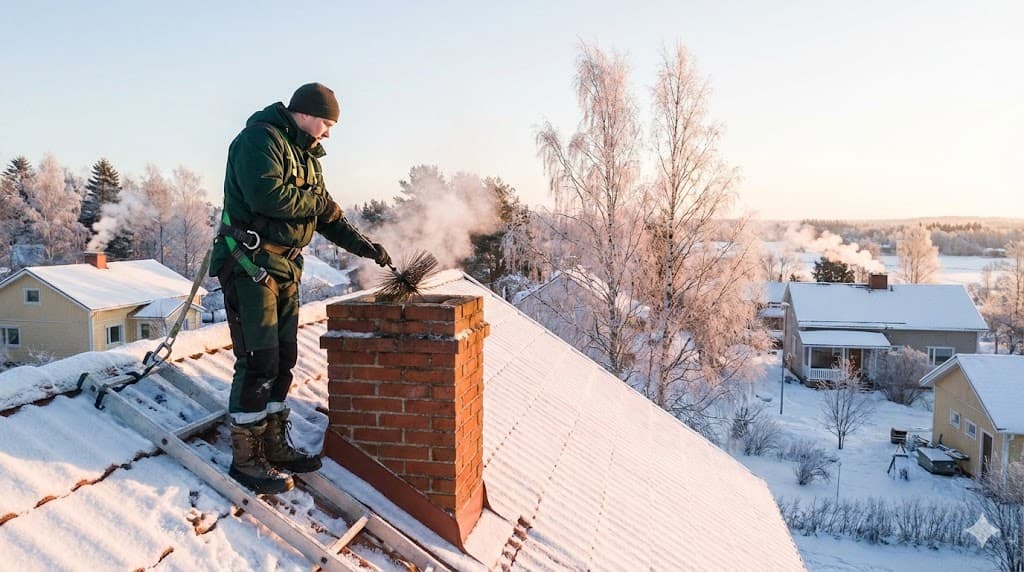
Chimney sweeping is recommended in the fall before the heating season starts. A clean chimney draws better and significantly reduces the risk of chimney fire. Check the condition of fireplaces, including cracks and seals. Chimney sweeping is a statutory obligation, and neglecting it can affect insurance compensation in the event of a fire.
The most important outdoor tasks in fall include gutter cleaning, shutting off outdoor water taps, and protecting outdoor furniture.
Fall checklist:
- Heating system: service and inspection (oil/gas burner, heat pump, or geothermal)
- Chimney sweeping: schedule in September, cost about 60–120 euros
- Fireplaces: check doors, seals, and masonry condition
- Radiators: bleed all radiators, check thermostatic valves
- Gutters: clean leaves and needles, check fasteners
- Outdoor water taps: close the indoor valve, drain the plumbing
- Outdoor furniture: wash, treat, and cover or move indoors
- Window seals: replace worn seals before freezing weather
- Drainage pump: check operation before the ground freezes
- Garage and storage: clean and organize, bring out winter supplies
Tools needed: Radiator bleeding key, sealing tape, gutter cleaning tool, ladder, protective covers for outdoor furniture. The total cost of professional fall maintenance (chimney sweeping, heating service) is typically 200–500 euros, but they prevent multiple times that amount in costs during winter.
Need professional help?
Talon Toveri's trained professionals help with all home maintenance tasks. Request a free, no-obligation quote.
★★★★★ 4.8/5 — 2,500+ satisfied customers
Winter maintenance tasks (December–February)
In winter, maintenance tasks focus on interiors and monitoring. Monitor the snow load on the roof and remove snow as needed — especially on flat roofs, excessive snow mass can cause structural problems. Even on pitched roofs, a snow load exceeding 100 kg/m² is a risk.
Indoors, monitor the humidity level. In winter, the air is often too dry, which irritates mucous membranes and can cause respiratory issues. The ideal relative humidity is 30–45 percent. You can monitor humidity with an affordable thermometer-hygrometer, available at hardware stores for about 15–30 euros.
Winter is a good time to plan upcoming spring and summer maintenance work and request quotes well in advance. Contractors are busiest in spring and early summer, so a winter quote request ensures better availability and possibly a lower price.
Winter checklist:
- Roof snow load: monitor and remove as needed (especially flat roofs and around skylights)
- Icicles: remove icicles from eaves for safety reasons
- Indoor humidity: measure and adjust, ideal level 30–45% RH
- Ventilation: ensure supply air valves are functioning, do not block them
- Heating system: monitor energy consumption and compare to previous years
- Drains: flush the kitchen drain with hot water monthly
- Interior: check wet room joints and silicone sealants
- Smoke detectors: test batteries and function monthly
Cost estimate: Winter maintenance tasks are mostly cost-free monitoring work. Professional snow removal from the roof costs about 200–500 euros per visit, so within your own safety limits, it's worth handling small snow tasks yourself.
Professional vs. DIY tasks — What should you do yourself?
A significant portion of home maintenance tasks are ones that a handy homeowner can handle on their own. Other tasks, however, require specialized skills, special tools, or regulatory approval. Drawing the right line saves both money and stress.
Tasks you can do yourself:
- Gutter cleaning (requires safe ladders or roof safety equipment)
- Floor drain cleaning and water trap inspection
- Ventilation filter replacement
- Supply air vent cleaning
- Window and door seal replacement
- Terrace washing and oil treatment
- Minor outdoor structure repairs
- Radiator bleeding
- Smoke detector testing and battery replacement
- Indoor humidity monitoring
- Garden plant trimming and yard care
Tasks that require a professional:
- Chimney sweeping — legally required and requires certification
- Roof inspection and repairs — safety risk and requires expertise
- Sewer camera inspection and pressure flushing — requires specialized equipment
- Ventilation duct cleaning — requires specialized equipment and expertise
- Heating system annual service — requires technical knowledge
- Electrical work — legally requires a licensed electrician
- Structural repairs and moisture damage repair
- Foundation drain inspection and repair
- High facade painting (scaffolding work)
Cost comparison: DIY vs. professional
DIY maintenance tasks typically save 60–80 percent of the professional price. For example, cleaning gutters yourself costs practically only your time, while a professional charges about 150–300 euros. On the other hand, poorly done work can turn out to be considerably more expensive — for example, a badly replaced roof tile can lead to water damage costing thousands of euros to repair.
Remember that for professional maintenance work, you can often take advantage of the household tax deduction, which covers 40 percent of the labor portion. This makes using professionals considerably more affordable than the final invoice amount suggests.
How to implement your maintenance checklist
Getting started with a maintenance checklist is easy. Begin by assessing the current condition of your home — go through all structures and systems and note down maintenance needs. Set calendar reminders or use a digital maintenance log that sends reminders automatically.
Professional help is especially recommended for sewer inspections, chimney sweeping, roof maintenance, and ventilation cleaning. These are tasks where professional skills and the right tools ensure the best results.
Implementation steps:
- Conduct an initial assessment: go through the entire house and note any deficiencies
- Determine your home's basic information: construction year, materials, systems
- Create an annual schedule: distribute maintenance tasks by month
- Set reminders: use a calendar, app, or digital maintenance log
- Request quotes for professional work: get at least 2–3 competitive quotes
- Document all completed maintenance: date, person, materials, costs
A digital maintenance log is the most convenient way to keep your maintenance checklist up to date. It goes with you on your phone, reminds you of upcoming maintenance, and stores historical data securely. Talon Toveri's maintenance log service offers all these features and integrates directly with our maintenance services.
Frequently Asked Questions
How often does a house need maintenance?
What maintenance tasks can I do myself?
How much does annual home maintenance cost?
What are the consequences of neglecting maintenance?
About the author

Carlos Martinez
Property maintenance specialist
Talon Toveri's editorial team consists of experienced property maintenance professionals with over 50 years of combined experience in home maintenance and repairs. We review every article's technical content based on industry best practices.
Content verified: The content of this page has been written and reviewed by Talon Toveri's professional property maintenance team. The information is based on industry best practices and years of field experience. Last updated February 15, 2026.
Read Also
DIY Drain Cleaning
A drain clog is a common problem that can often be solved with DIY methods. In this guide, we cover the most effective methods and when it's time to call a professional.
Indoor Air Quality Issues
Indoor air quality issues are common in Finnish homes. This guide helps you identify symptoms, determine causes, and find solutions for better indoor air.
Spring Home Maintenance
Spring maintenance is one of the most important annual property maintenance tasks. Inspect the roof, gutters, drains, and yard after winter to prevent costly damage.
Related Services
Professional sewer cleaning keeps your piping in good condition and prevents blockages. Pressure flushing, mechanical cleaning, and preventive maintenance. Request a quote!
Roof washingProfessional roof washing removes moss, lichen and dirt. Roof surface cleaning extends the lifespan of your roof and improves its appearance. Request a quote!
Chimney sweepingBook a professional chimney sweep easily. A chimney sweep cleans flues and fireplaces safely. Prices from €80. Book your chimney sweeping now!
Ventilation Duct CleaningProfessional ventilation duct cleaning. Air duct cleaning improves indoor air quality and reduces energy consumption. Request a quote!