Fall Home Maintenance — Prepare Your Home for Winter
Fall maintenance is key to ensuring your home's winter resilience. This guide covers all the important tasks before the freezing season.
Illustration
- Heating system service before winter is critical
- Chimney sweeping is a statutory obligation and should be done before the heating season
- Cleaning gutters of fall leaves prevents ice dam formation
- Shutting off and draining outdoor water taps prevents pipe damage
- Checking foundation drains before the ground freezes is important
Article Summary
| Topic | fall home maintenance |
| Reading time | 18 minutes |
| Updated | 2/14/2026 |
| Author | Talon Toveri — Editorial Team |
| Suitable for | Homeowners, housing associations |
Roof and gutter inspection
In fall, roof inspection is important before the arrival of snow loads. Make sure there are no damage on the roof that could leak during winter. The tightness of flashings and penetrations is especially important to check, as these are the most common sources of leaks.
Inspect the roofing material systematically. For tile roofs, look for cracked or detached tiles. For metal roofs, check seams, screw tightness, and any rust spots. For felt roofs, look for cracks, bubbles, and detached seams. Even a single damaged spot can cause significant water damage during winter.
Cleaning gutters of fallen leaves is essential. Clogged gutters can freeze during winter and cause ice dams that direct meltwater into wall structures. Clean gutters at least twice in fall — the first time in October and the second time in November, when most leaves have fallen.
Also check gutter slopes and fastenings. The correct slope is about 3–5 mm per meter toward the downspout. If gutters have sagged or fasteners loosened, repair them before winter. The bottom of downspouts should have an extension piece that directs water at least 1.5 meters away from the foundation.
Illustration
Heating system service
Heating system annual service should be done before the heating season begins, preferably in September–October. The service includes checking the burner, heat exchanger, settings, and safety devices. A well-maintained system operates more efficiently and consumes up to 10–15 percent less energy than an unmaintained one.
Oil heating: Oil burner service includes cleaning and, if necessary, replacing the nozzle, pump, and flame head. A flue gas analysis shows combustion efficiency. Good efficiency is over 90 percent. Service cost is typically 200–400 euros.
Geothermal: The geothermal heat pump compressor operation, domestic hot water temperature, and heating circuit pressures should be checked. Filters are cleaned and the brine circuit pressure is verified. Service cost is about 150–350 euros.
Air-to-water heat pump: The outdoor unit cleanliness, filters, and refrigerant charge are checked. The area around the outdoor unit is cleaned of leaves and debris to ensure free air circulation.
Radiator bleeding and network balancing should be done in fall. Air in the radiator network weakens heat transfer and causes knocking sounds. Bleed radiators one by one, starting from the lowest floor. Thermostatic valve operation should also be checked — a stuck valve can cause cold rooms or unnecessary energy consumption.
For underfloor heating systems, check the operation of the circuit valves and make sure thermostats respond correctly. Air that may have accumulated in the circuits of a water-based underfloor heating system is removed from the manifold.
Chimney sweeping and fireplaces
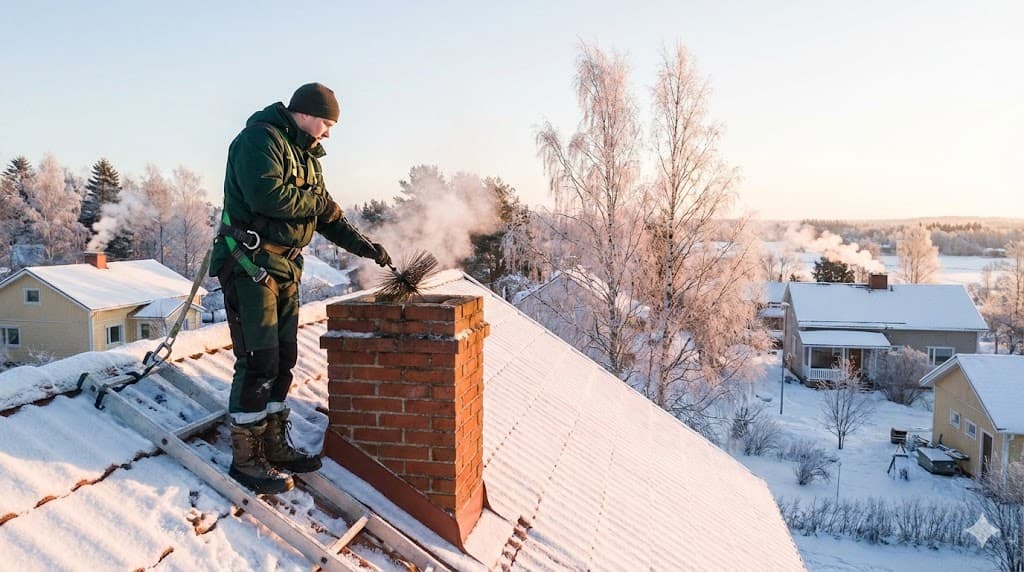
Chimney sweeping is a statutory obligation and must be done before the heating season begins. The Rescue Act (379/2011) stipulates that fireplaces and flues must be swept regularly. Flues of fireplaces in regular use must be swept annually. Professional chimney sweeping cleans the flue of soot deposits and significantly reduces the risk of fire — a soot fire can cause a house fire with damages easily reaching tens of thousands of euros.
The chimney sweep also checks the condition of the flue and reports any repair needs. During sweeping, flue connections, cracks, penetrations, and flashings are inspected. Chimney sweeping typically costs 80–150 euros per fireplace.
Fireplace condition should be checked in fall before the first firing. Inspect carefully:
- Masonry cracks: Small hairline cracks are common and usually not dangerous, but larger cracks may allow flue gases into the building structure
- Door seals: Worn seals reduce combustion efficiency and can allow smoke into the room
- Ash pit: Empty the ash pit and check the grate condition
- Damper: Make sure the damper opens and closes fully
- Flue plate: Check the flue plate's tightness and condition
If the fireplace has been out of use for a long time, have a chimney sweeping and condition check done by a professional before using it again. A long-unused flue may be blocked or damaged without visible signs.
Illustration
Water pipe and drain protection
Outdoor water taps must be shut off and drained before freezing weather — preferably as early as October, before the first overnight frosts. Frozen water expands by about 9 percent and can crack the pipe, leading to water damage when the ice melts. Pipe break repair can cost from hundreds to thousands of euros, depending on the extent of the damage.
Shutting off the outdoor water tap is done as follows:
- Close the indoor valve for the outdoor water tap (usually in the basement or utility room)
- Open the outdoor tap so remaining water drains out
- Leave the outdoor tap open during winter so any freezing water doesn't create pressure
- Drain garden hoses and store them indoors
- Disconnect and drain garden sprinklers and automatic irrigation systems
Drain maintenance is a good idea before winter. Clean all floor drains by lifting the grate and water trap. Remove hair, soap residue, and other accumulated debris. Make sure all drains with water traps are filled with water to ensure the odor-blocking function — especially for less frequently used drain points.
If the property has a sewage pumping station, check the pump operation and clean the pumping well. Testing the automation is important before winter. Professional drain pressure flushing every 2–3 years prevents clogs and keeps the plumbing in good condition.
Yard and outdoor structures
Outdoor furniture should be covered or moved indoors. Wood furniture withstands winter better when protected from moisture and freezing. Wash the furniture before storing and treat with wood preservative if needed. Grills and other outdoor equipment should be cleaned and covered with a weatherproof protective cover.
Terrace oil treatment should be done no later than early fall before the wet season. Oil protects the wood from moisture and UV radiation. First clean the terrace with a pressure washer or brush, let it dry for at least two days, then apply decking oil according to the manufacturer's instructions. Treatment is best done in dry, warm weather (above +10 °C).
Check the condition of stairs and railings to ensure safety in slippery conditions. Loose railings, worn steps, and missing anti-slip features are a safety risk, especially in icy conditions. Install anti-slip measures on stairs and walkways.
Other fall yard tasks:
- Lawn: Mow one last time in October to a short height (about 4 cm) so the lawn overwinters well
- Trees and shrubs: Remove dead and damaged branches, protect young trees with mesh guards
- Plantings: Check that perennials have been cut back and covered as needed
- Walkways: Fix depressions and ruts so water doesn't collect and freeze
- Lighting: Check outdoor light operation — visibility and safety during the dark season is important
Need professional help?
Talon Toveri's trained professionals help with all home maintenance tasks. Request a free, no-obligation quote.
★★★★★ 4.8/5 — 2,500+ satisfied customers
Fall maintenance checklist
A comprehensive fall maintenance checklist helps ensure no important task is missed. Print or save this list and go through it point by point.
Roof and attic:
- Check roofing material condition (tiles, metal, felt)
- Check flashing and joint tightness
- Check penetration seals (chimney, ventilation pipes)
- Clean gutters and downspouts twice during fall
- Check attic ventilation — ventilation openings must not be blocked
- Check attic insulation and any signs of moisture
Facade and foundations:
- Check wall cladding condition and paint integrity
- Check window and door seals — replace worn ones
- Check foundation wall condition — cracks and deterioration
- Verify ground slopes away from the building
- Check foundation drain inspection wells and verify water flow
HVAC systems:
- Have heating system annual service performed
- Bleed radiators and check thermostatic valves
- Schedule chimney sweeping before the heating season
- Check fireplace condition (cracks, seals, dampers)
- Shut off and drain outdoor water taps
- Clean floor drains and water trap drains
- Change ventilation filters
- Clean supply air vents
Yard and outdoor spaces:
- Cover or store outdoor furniture and grills
- Oil the terrace if last treated over a year ago
- Check stair and railing condition, install anti-slip measures
- Mow the lawn one last time short
- Check and repair outdoor structures (fences, gates, retaining walls)
- Check outdoor lighting and replace broken bulbs
Safety:
- Test smoke detectors and replace batteries
- Check fire blanket and hand extinguisher (inspection every 2 years)
- Verify roof safety equipment (ladders, snow guards, walkways) condition
- Check availability of de-icing material for the yard
Energy efficiency in winter
Preparing for winter is also an excellent opportunity to improve your home's energy efficiency. Optimizing energy consumption in fall can save 10–30 percent on heating costs during winter.
Seal the structure:
The condition of window and door seals is one of the most significant factors in energy efficiency. Old and worn seals let cold air in and warm air out. Replacing seals is inexpensive (material cost just a few dozen euros) and easy — you can do it yourself. Seal condition can be tested by placing a strip of paper between the door or window and closing it: if the paper pulls out easily, the seal is not tight enough.
Optimize heating settings:
- Set room temperatures sensibly: living room 21 °C, bedroom 18–20 °C, utility room 18 °C
- A one-degree reduction in room temperature saves about 5 percent in heating energy
- Use thermostatic valves or programmable thermostats for temperature control
- Lower the temperature at night and when away
Window energy efficiency:
Curtains and blinds act as additional thermal insulation. Close thick curtains in the evening and open them during the day to take advantage of the warming effect of sunlight. Triple-pane windows are significantly more energy efficient than double-pane — replacing windows can be a worthwhile investment in older homes.
Ventilation balancing:
Make sure ventilation is not oversized. Excessive ventilation in cold weather unnecessarily increases heating costs. In mechanical supply-exhaust systems, heat recovery (HRV) is a critical component — check its cleanliness and function. A good HRV unit recovers up to 70–80 percent of the exhaust air's thermal energy.
Attic insulation:
If attic insulation is thin (less than 300 mm of blown insulation or equivalent), adding insulation is one of the most cost-effective energy-saving measures. Heat escaping through the attic can account for 15–25 percent of total heat loss.
Fall maintenance schedule month by month
Fall maintenance should be spread across three months — from September to November. This way, tasks don't pile up and each task gets done at the right time.
September — Preparation and professional bookings
- Schedule heating system service — professionals are less busy in early September than later in fall
- Schedule chimney sweeping — book early, as September is peak season for sweeps
- Do the terrace oil treatment — September is still warm and dry enough
- Check roof condition — still safe and comfortable to work on the roof
- Check fireplace condition before the first firing
- Change ventilation filters
October — Outdoor work and protection
- Clean gutters for the first time after leaves have fallen
- Shut off outdoor water taps and drain plumbing before the first overnight frosts
- Clean floor drains and check water traps
- Cover outdoor furniture and grills or move them indoors
- Mow the lawn one last time (to about 4 cm height)
- Check outdoor structures and stairs — install anti-slip measures
- Check foundation drain inspection wells and verify water flow
- Bleed radiators and check thermostatic valves
November — Finishing touches and safety
- Clean gutters a second time — the last leaves have now fallen
- Check window and door seals — replace worn ones
- Test smoke detectors and replace batteries
- Check roof safety equipment condition (snow guards, roof ladders, walkways)
- Ensure de-icing sand and snow removal tools are available
- Check outdoor lighting operation — the dark season begins
- Do a final inspection round: are all outdoor tasks completed?
- Move snow removal tools and de-icing container to an easily accessible location
Cost summary: The total cost of typical fall maintenance for a detached house including professional work is about 400–800 euros. This includes chimney sweeping (80–150 euros), heating service (150–400 euros), and possible roof inspection (150–300 euros). DIY tasks (gutter cleaning, seal replacement, yard work) mainly require your own time and inexpensive materials. Remember that you can take advantage of the household tax deduction for professional maintenance work, which covers 40 percent of the labor portion.
Frequently Asked Questions
When should fall maintenance be started?
Is chimney sweeping mandatory?
What happens if you don't shut off the outdoor water tap?
How much does heating system service cost?
About the author

Aaron Vihersola
HVAC specialist
Talon Toveri's editorial team consists of experienced property maintenance professionals with over 50 years of combined experience in home maintenance and repairs. We review every article's technical content based on industry best practices.
Content verified: The content of this page has been written and reviewed by Talon Toveri's professional property maintenance team. The information is based on industry best practices and years of field experience. Last updated February 14, 2026.
Read Also
Home Maintenance Checklist
A home maintenance checklist helps you remember important maintenance tasks at the right time. Regular maintenance saves money and keeps your home value high.
DIY Drain Cleaning
A drain clog is a common problem that can often be solved with DIY methods. In this guide, we cover the most effective methods and when it's time to call a professional.
Indoor Air Quality Issues
Indoor air quality issues are common in Finnish homes. This guide helps you identify symptoms, determine causes, and find solutions for better indoor air.
Related Services
Professional roof maintenance and roof inspection. Prevent leaks and damage with regular roof maintenance. Book a roof inspection today!
Chimney sweepingBook a professional chimney sweep easily. A chimney sweep cleans flues and fireplaces safely. Prices from €80. Book your chimney sweeping now!
Boiler MaintenanceBoiler maintenance, cleaning, and burner adjustment. Regular maintenance improves efficiency and extends the boiler lifespan.
Terrace OilingProfessional terrace oiling protects wood from moisture and UV radiation. Significantly extends the lifespan of your terrace. Prices from €200.